
Trails in this park
3 trails · 53.4 km of trails
Cape Scott Park is a truly magnificent area of rugged coastal wilderness that is located at the northwestern tip of Vancouver Island, 563 kilometres from Victoria. Established in 1973 and named after the site of a lighthouse that has guided mariners since 1960, Cape Scott is characterized by more than 115 kilometres of scenic ocean frontage, including about 30 kilometres of spectacular remote beaches.
The park stretches from Shushartie Bay in the east, then westward around Cape Scott and south to San Josef Bay. Rocky promontories, salt marshes and jagged headlands punctuate the fine-textured, white-sand beaches. The most impressive of these beaches, Nels Bight, stretches more than 2,400 metres long and 210 metres wide at low tide, and is one of the park’s most popular camping destinations. Other significant beaches include San Josef Bay, Guise Bay, Experiment Bight, Lowrie Bay and Nissen Bight.
Visitors can choose between a day hike or a backpacking excursion to explore the sandy beaches, rainforests, and lowland bogs and muskeg of this wilderness park.
Cape Scott Park is home to sea stacks, which visitors can access at low tide. The eastern portion of the park contains a number of estuaries that are accessible only by boat. Cape Scott is also fortunate to have some excellent examples of old-growth forest, including Sitka Spruce in excess of three metres in diameter, and Western Red Cedar of similar sizes. Examples of these trees can be found throughout the park, including on the easy hike to San Josef Beach. About 20 minutes north of the Eric Lake campsite is a Sitka Spruce that measures more than seven metres in circumference. This is a popular spot for hikers to stop and absorb their surroundings, as well as take photographs.
The lighthouse and the cape are outside the park boundary and are private property belonging to the Department of National Defence. The old trail and foghorn were built during World War Two by DND staff to give access to the beach etc. but as the old structures, boardwalk and suspension bridges deteriorated, they became dangerous and were removed by the federal government. BC Parks is not responsible for this trail and not allowed to trespass on this private property.
Even though Cape Scott is a wilderness park, a variety of tourist facilities are located nearby in Port Hardy, Port McNeill, Holberg and Port Alice. Accommodation in these communities is limited, so reservations are recommended. Consult the Accommodation and Campground Directory published by Tourism British Columbia for names, addresses and other pertinent information. Some links that may be helpful:
簡介
開普斯科特公園(Cape Scott Park)是位於溫哥華島(Vancouver Island)西北端、距維多利亞(Victoria)563公里處的壯麗崎嶇海岸荒野;公園於1973年設立,以自1960年以來指引水手的燈塔所在地命名。公園以超過115公里的風景海岸線為特色,包括約30公里壯觀的偏遠海灘;公園從東部的舒沙蒂灣(Shushartie Bay)向西環繞開普斯科特(Cape Scott),向南延伸至聖約瑟夫灣(San Josef Bay)。岩石岬角、鹽沼與鋸齒狀海角點綴著質地細膩的白色沙灘;最壯觀的海灘尼爾斯灣(Nels Bight)長逾2,400公尺、低潮時寬210公尺,是公園最受歡迎的露營地之一,其他重要海灘包括聖約瑟夫灣、吉斯灣(Guise Bay)、實驗灣(Experiment Bight)、勞里灣(Lowrie Bay)與尼森灣(Nissen Bight)。遊客可選擇一日健行或背包旅行,探索沙灘、雨林、低地沼澤與泥炭沼;公園亦是海蝕柱的家園,低潮時可前往,東部有多個僅能乘船抵達的河口,園內還有極佳的古老森林範例,包括直徑超過3公尺的西加雲杉(Sitka Spruce)與大小相近的西部紅雪松(Western Red Cedar),其中一株位於聖約瑟夫海灘輕鬆健行路線沿途、埃里克湖(Eric Lake)以北約20分鐘處的西加雲杉周長逾7公尺,是健行者停留欣賞與拍照的熱門地點。公園為步行進入式公園,園內唯一的停車場位於東南角附近,可輕鬆前往開普斯科特與聖約瑟夫灣步道起點,停車場位於哈迪港(Port Hardy)以西64公里處,可經由公共公路與私人伐木路組合駕車抵達;哈迪港是19號公路(Highway 19)的北端終點,連接溫哥華島南至維多利亞的社區,亦是卑詩渡輪前往魯珀特王子港(Prince Rupert)航線的南端終點,哈迪港亦有定期航班與巴士服務,公園西南的溫特港(Winter Harbour)社區提供旅遊設施、房車營地、加油站與雜貨店。
重點資訊
- 野外腹地露營(Backcountry camping):允許,但設施有限,僅設食物儲藏箱與旱廁;請盡可能在海灘露營,臨時庇護所離開前須完全拆除並恢復原狀
- 健行(Hiking):請沿指定步道行走;聖約瑟夫灣2.5公里步道已鋪設碎石並延伸木板路,坡度超過8.33%的路段設有無障礙設施與步道起點的無障礙旱廁
- 獨木舟(Canoeing)、游泳(Swimming)、釣魚(Fishing)與野生動物觀賞(Wildlife viewing):聖約瑟夫灣設有卑詩省公園船隻下水處,僅供獨木舟、皮划艇與小型車頂船使用;聖約瑟夫河在此處受潮汐影響,低潮時請勿計畫使用下水處
English
Cape Scott Park is a truly magnificent area of rugged coastal wilderness that is located at the northwestern tip of Vancouver Island, 563 kilometres from Victoria. Established in 1973 and named after the site of a lighthouse that has guided mariners since 1960, Cape Scott is characterized by more than 115 kilometres of scenic ocean frontage, including about 30 kilometres of spectacular remote beaches.
The park stretches from Shushartie Bay in the east, then westward around Cape Scott and south to San Josef Bay. Rocky promontories, salt marshes and jagged headlands punctuate the fine-textured, white-sand beaches. The most impressive of these beaches, Nels Bight, stretches more than 2,400 metres long and 210 metres wide at low tide, and is one of the park’s most popular camping destinations. Other significant beaches include San Josef Bay, Guise Bay, Experiment Bight, Lowrie Bay and Nissen Bight.
Visitors can choose between a day hike or a backpacking excursion to explore the sandy beaches, rainforests, and lowland bogs and muskeg of this wilderness park.
Cape Scott Park is home to sea stacks, which visitors can access at low tide. The eastern portion of the park contains a number of estuaries that are accessible only by boat. Cape Scott is also fortunate to have some excellent examples of old-growth forest, including Sitka Spruce in excess of three metres in diameter, and Western Red Cedar of similar sizes. Examples of these trees can be found throughout the park, including on the easy hike to San Josef Beach. About 20 minutes north of the Eric Lake campsite is a Sitka Spruce that measures more than seven metres in circumference. This is a popular spot for hikers to stop and absorb their surroundings, as well as take photographs.
The lighthouse and the cape are outside the park boundary and are private property belonging to the Department of National Defence. The old trail and foghorn were built during World War Two by DND staff to give access to the beach etc. but as the old structures, boardwalk and suspension bridges deteriorated, they became dangerous and were removed by the federal government. BC Parks is not responsible for this trail and not allowed to trespass on this private property.
Even though Cape Scott is a wilderness park, a variety of tourist facilities are located nearby in Port Hardy, Port McNeill, Holberg and Port Alice. Accommodation in these communities is limited, so reservations are recommended. Consult the Accommodation and Campground Directory published by Tourism British Columbia for names, addresses and other pertinent information. Some links that may be helpful:
繁體中文
開普斯科特公園(Cape Scott Park)是位於溫哥華島(Vancouver Island)西北端、距維多利亞(Victoria)563公里處的壯麗崎嶇海岸荒野;公園於1973年設立,以自1960年以來指引水手的燈塔所在地命名。公園以超過115公里的風景海岸線為特色,包括約30公里壯觀的偏遠海灘;公園從東部的舒沙蒂灣(Shushartie Bay)向西環繞開普斯科特(Cape Scott),向南延伸至聖約瑟夫灣(San Josef Bay)。岩石岬角、鹽沼與鋸齒狀海角點綴著質地細膩的白色沙灘;最壯觀的海灘尼爾斯灣(Nels Bight)長逾2,400公尺、低潮時寬210公尺,是公園最受歡迎的露營地之一,其他重要海灘包括聖約瑟夫灣、吉斯灣(Guise Bay)、實驗灣(Experiment Bight)、勞里灣(Lowrie Bay)與尼森灣(Nissen Bight)。遊客可選擇一日健行或背包旅行,探索沙灘、雨林、低地沼澤與泥炭沼;公園亦是海蝕柱的家園,低潮時可前往,東部有多個僅能乘船抵達的河口,園內還有極佳的古老森林範例,包括直徑超過3公尺的西加雲杉(Sitka Spruce)與大小相近的西部紅雪松(Western Red Cedar),其中一株位於聖約瑟夫海灘輕鬆健行路線沿途、埃里克湖(Eric Lake)以北約20分鐘處的西加雲杉周長逾7公尺,是健行者停留欣賞與拍照的熱門地點。公園為步行進入式公園,園內唯一的停車場位於東南角附近,可輕鬆前往開普斯科特與聖約瑟夫灣步道起點,停車場位於哈迪港(Port Hardy)以西64公里處,可經由公共公路與私人伐木路組合駕車抵達;哈迪港是19號公路(Highway 19)的北端終點,連接溫哥華島南至維多利亞的社區,亦是卑詩渡輪前往魯珀特王子港(Prince Rupert)航線的南端終點,哈迪港亦有定期航班與巴士服務,公園西南的溫特港(Winter Harbour)社區提供旅遊設施、房車營地、加油站與雜貨店。
重點資訊
- 野外腹地露營(Backcountry camping):允許,但設施有限,僅設食物儲藏箱與旱廁;請盡可能在海灘露營,臨時庇護所離開前須完全拆除並恢復原狀
- 健行(Hiking):請沿指定步道行走;聖約瑟夫灣2.5公里步道已鋪設碎石並延伸木板路,坡度超過8.33%的路段設有無障礙設施與步道起點的無障礙旱廁
- 獨木舟(Canoeing)、游泳(Swimming)、釣魚(Fishing)與野生動物觀賞(Wildlife viewing):聖約瑟夫灣設有卑詩省公園船隻下水處,僅供獨木舟、皮划艇與小型車頂船使用;聖約瑟夫河在此處受潮汐影響,低潮時請勿計畫使用下水處
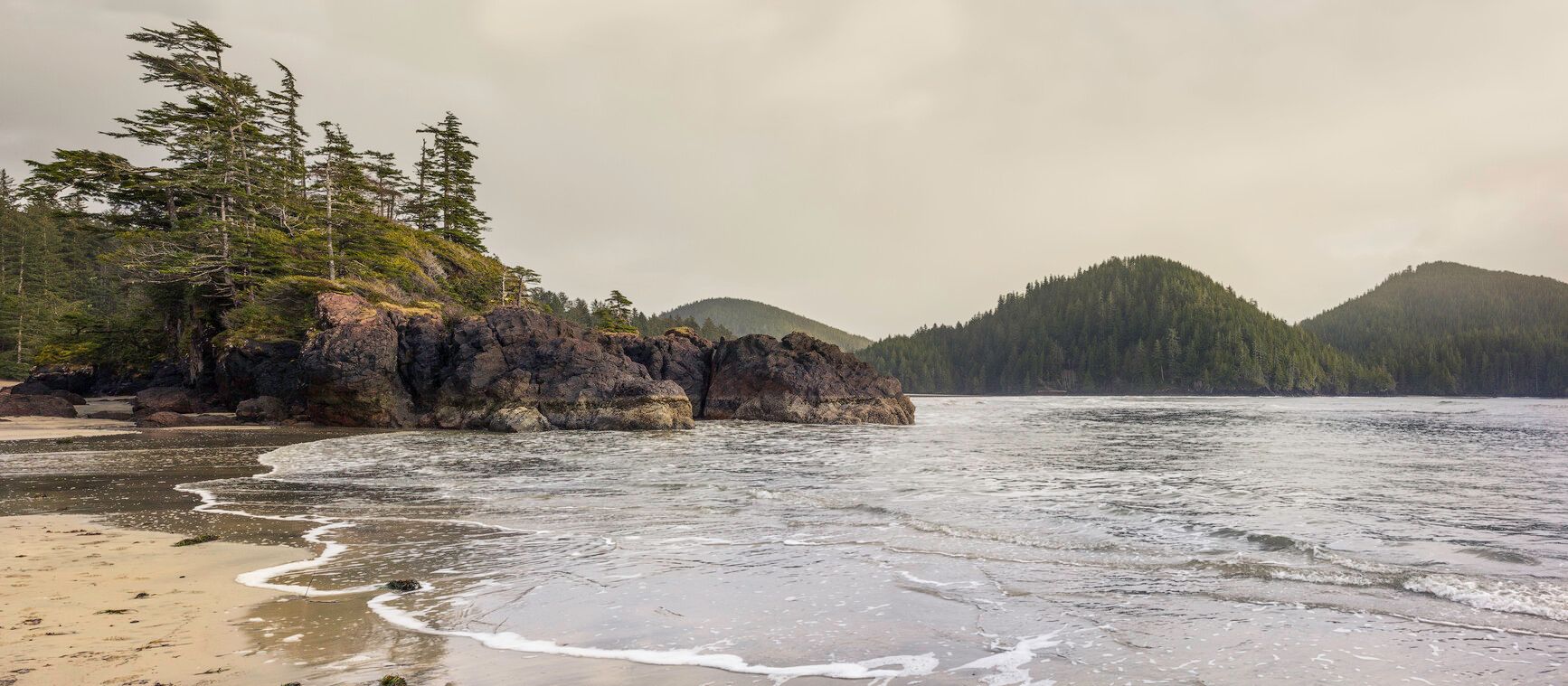
Rugged coastal beauty at Cape Scott Park, where rocky outcrops meet serene sandy shores and forested hills rise beyond the mist. Credit Destination BC
Camping & booking
Cape Scott Park offers these camping options:
- Wilderness camping
- Backcountry camping
See the Camping tab for full details, seasons and fees.
Difficulty ratings describe terrain technical difficulty, not physical fitness intensity. Trails are shown in featured order; featured order is not based on visitor traffic.
Medium difficulty
Not specified
Wilderness camping
Wilderness camping is allowed in this park in areas with limited facilities.
- No facilities other than food caches (at Guise Bay, Nels Bight, San Josef, Nissen Bight, and Eric Lake) and pit toilets are provided.
- Please camp on the beach whenever possible.
- If you erect a temporary shelter, please dismantle it entirely and return the site to its natural state before you leave.
Backcountry camping
There are 11 designated camp pads located at Eric Lake, available on a first come, first served basis. There is no longer a campsite at Donaldson Farm.
Wilderness camping is also allowed in areas with no designated campsites.
Cape Scott Park is open year-round (check website for updates on trail conditions in case areas are closed for safety reasons). Fees are only collected from May 1 to September 30 when backcountry services are provided.
Backcountry camp fees
Camping fees (per night)- $10 per adult (16+)
- $5 per yourth (6 to 15)
- Free for childeren under 6
You can get a camping permit before leaving home on the backcountry permit registration service. Although the system does not reserve a campsite, the system provides visitors the convenience of prepaying for their trip and not having to carry cash. We encourage all visitors to register online so we can reduce the need to collect fees in the field.
Self-registration vaults are located at the San Josef River boat launch and trailhead.
All fees are in Canadian dollars (CAD).
Hiking
For your own safety and preservation of the park obey posted signs and keep to designated trails. Shortcutting, switchbacking, skirting mud holes, and trampling across meadows and boggy ground destroy the plant life and soil structure, thus increasing erosion and deterioration of the trails.
Canoeing
Canoeing is becoming increasingly popular, particularly in San Josef Bay, where there is a BC Parks boat launch.
Swimming
There are no designated swimming areas at Cape Scott Park, however the beaches at Nels Bight and San Josef Bay are popular destinations for swimmers. Please be aware of sometimes intense surf conditions and possible riptides.
Fishing
Fishing is permitted as per provincial and federal fishing regulations. All anglers should check the current regulations issued by Fisheries and Oceans Canada prior to fishing.
Wildlife viewing
The scenery in this park is incredible no matter where you are. The view from the top of Mount St. Patrick offers spectacular panoramic views of San Josef Bay and down into Sea Otter Cove and the unspoiled wilderness of Cape Scott Park.
Winter recreation
This park is open year-round. The camping rules noted above apply, however there is no winter camping fee.
Kayaking
Kayaking is becoming increasingly popular, particularly in San Josef Bay, where there is a BC Parks boat launch. More experienced kayakers can make the trip from Port Hardy and around the Cape, finishing in Winter Harbour or Coal Harbour. San Josef Bay has also become a popular spot for surf kayaking, particularly in the spring and fall when waves are larger.
Pets on leash
Dogs are permitted in San Josef Bay only. Dogs are prohibited in all other areas of Cape Scott including all sites on the North Coast trail.
Warning: a wolf advisory in in effect.
Hunting
Hunting is permitted in Cape Scott Park and east of Dakota Creek during an open season.
West of Dakota Creek, there is no open season for wildlife, hunting is restricted to the following waterfowl:
- Ducks
- Coots
- Common snipe
- Snow geese
- Ross' geese
- Canada geese
- Cackling geese
- White-fronted geese
Please consult the BC Government Hunting and Trapping Regulations Synopsis for more information. Contact BC Parks at parkinfo@gov.bc.ca with any specific questions.
Pit or flush toilets
There are 10 pit toilets available throughout the park. There are no flush toilets at this park.
Accessibility information
The 2.5 km trail to San Josef Bay has been resurfaced with crushed material, and an existing section of the boardwalk has been extended. The trail is barrier-free with some slopes exceeding 8.33%. Accessible parking and an accessible pit toilet are available at the trailhead.
Boat launch
BC Parks’ boat launch is accessed via San Josef Heritage Park, but it is a BC Parks facility. It is for canoes and kayaks and small car-toppers only. The San Josef River is tidal at this spot so don’t plan on using the launch at low tide or you may be hauling over gravel bars.
Campfires
While fires are allowed, we encourage visitors to conserve the environment by minimizing the use of fire and using stoves instead. Two communal fire rings are provided at Eric Lake and three at Nels Bight. Campers are requested to not bury their beach campfires. Several visitors have been burned where fires have been buried. Please practice Leave No Trace camping ethics.
Getting there
National Topographic Series maps, scale 1:50,000, Index No. 102, Sheets i/9 and i/16 cover the Cape Scott area. These maps are available from most map retailers in British Columbia.
Cape Scott is a hike-in park, located at the northwestern tip of Vancouver Island. The only parking lot within the park, located near the southeast corner, provides easy access to the Cape Scott and San Josef Bay Trailhead. The lot, which is located 64 kilometres west of Port Hardy, can be reached by driving on a combination of public highways and private, active logging roads.
Port Hardy is the northern terminus of Highway 19, which connects with Vancouver Island communities south to Victoria, it is also the southern terminus of the British Columbia Ferries service to Prince Rupert. Port Hardy is also served by regularly scheduled air and bus lines. The community of Winter Harbour is another settlement southwest of the park that offers tourist amenities, RV campsites, fuel and a general store.
- For additional information on transportation options to the park, visit the North Coast trail shuttle’s webpage.
Access
Logging trucks are present on the gravel access road from Port Hardy to the Cape Scott trail head. Drive with caution and lights on at all times. Always yield to logging trucks and be mindful of pull outs. It is best to pull to the side of the road and let trucks pass.
The following links are the park use permit holders with permission to transport visitors to and from the park:
Wildlife Safety
Visitors should be prepared to encounter bears and wolves throughout Cape Scott.
Read the bear safety guidelines and the wolf safety guidelines.
- Ensure your vehicle is locked and windows are closed. Food and other attractants must be secured in the trunk of the vehicle. Bears have broken into vehicles parked in the Cape Scott Park.
- During low tide, bears frequent the shoreline turning over rocks in search of food on the North Coast Trail, Nahwitti River area. Camp only within the developed campsite area, avoid camping along in close proximity to shoreline areas.
Hiking and Camping
- School hiking groups registration
- Detailed hiking and trail information
- All campers and hikers should be prepared for extremely cold and wet conditions year-round.
- The boardwalk is extremely slippery when wet. Please avoid hiking beside the boardwalk and off the established trail as this increases sediment flow and will damage the sensitive riparian habitat.
- Water sources are very limited. Carry an adequate supply of drinking water or be prepared to boil or treat water.
- Please pack out what you pack in and use Leave No Trace while visiting the park.